Ten-Minute Story Exercise (Friday)

Day Five of my ten-minute short story challenge! I missed Day Four yesterday, but we carry on. Read Monday's entry here, Tuesday's entry here, and Wednesday's entry here.
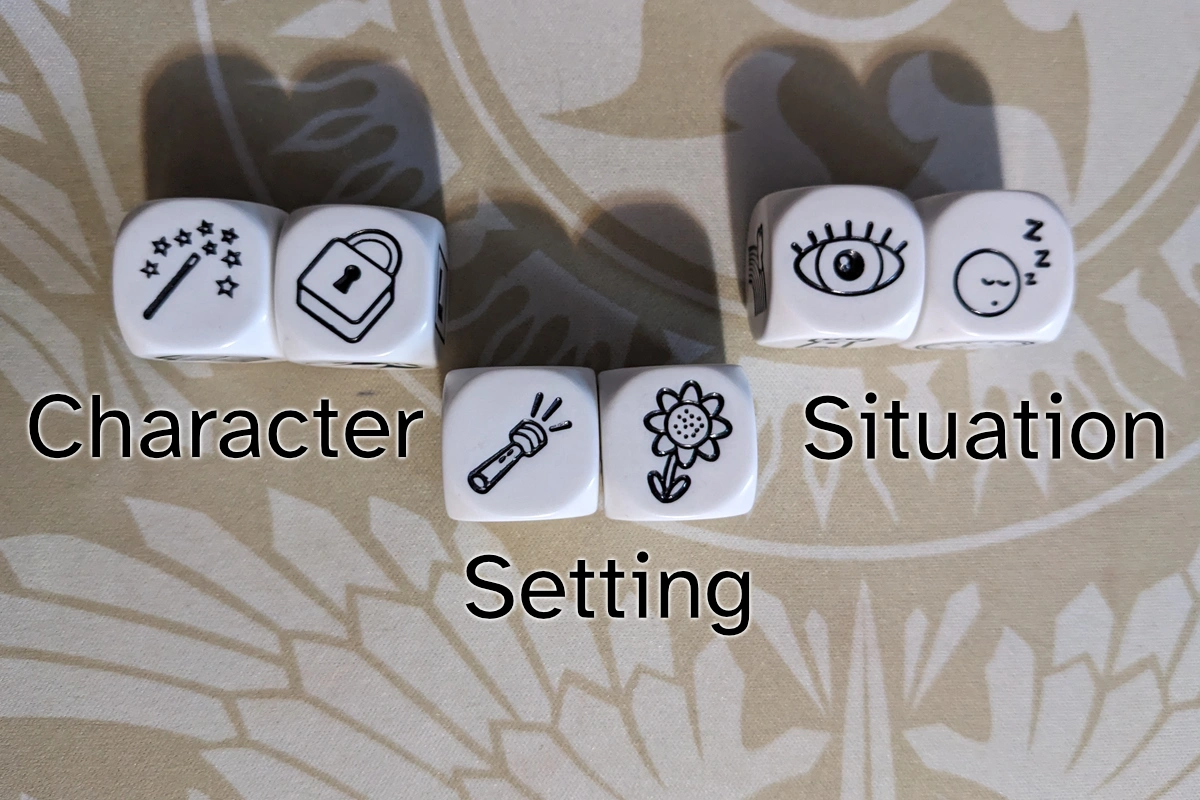
I interpreted the character to be someone who could magically open locks, the setting to be a greenhouse, and the situation to be a sleeping guardian waking up.


Because I've got magic hands, they call me Magic Hans. Now, sane and rational people know that magic doesn't exist, so it's just a joke.

I've really, truly got magic hands, though. I can open any lock just by poking and prodding at it for a few moments. Padlock, keypad, even a laptop password—if it was meant to keep me out, I can get it without a problem.

I work for some shady people who deal in high-tech secrets. I'm grateful for the work. They pay real well. I'm also paranoid that they'll sell me to the highest bidder if they realize my full capabilities, so I employ a little misdirection. I carry the most expensive lockpicks on the black market and a little electronic box with a half-dozen cables poking out of it which really connect to nothing at all—but as far as my confederates know, it's how I crack every security alarm and computer server we need to get into. I'm real careful about seeming secretive about my "tools." The only problem is at least one or two other guys clearly want to make off with my little cable box, and if they do, and they find it's empty, then the real questions will start.

Don't ask where the magic came from. I was born with it, as far as I know.

Tonight, that magic will come in very handy. We've crawled under the city's old maintaince tunnels, sloshing through the blackish sludge remnants of decomposed clones banished down into the dark. The soupy stuff, believe it or not, carries no scent at all. But it's apparently miraculous fertilizer if you mix it with some very smelly chemicals. That's, supposedly, what our mark's been doing.

Borble's his name. He's got a farm of sorts down here, in one of the ancient supply houses that used to service the clone workers who built the city in the first place. Nobody comes down here anymore on account of the whole business with the nervous systems of those clones surviving and... adapting.

We lured them away with bait an hour ago. They won't be bothering us until Jimnothy's nothing but a skeleton.

Poor Jimnothy.

The heavy riveted door's before us, set into the old brick walls. There's a security box jutting from the brick beside the door. It's been slathered with black paint and sludge in an attempt to make it look like part of the original construction.

I know better.

I put my hand to the metal, the slime squelching beneath my magic fingers.
Ten-Minute Story Exercise (Wednesday)

Day Three of my ten-minute short story challenge! Read Monday's entry here and Tuesday's entry here.

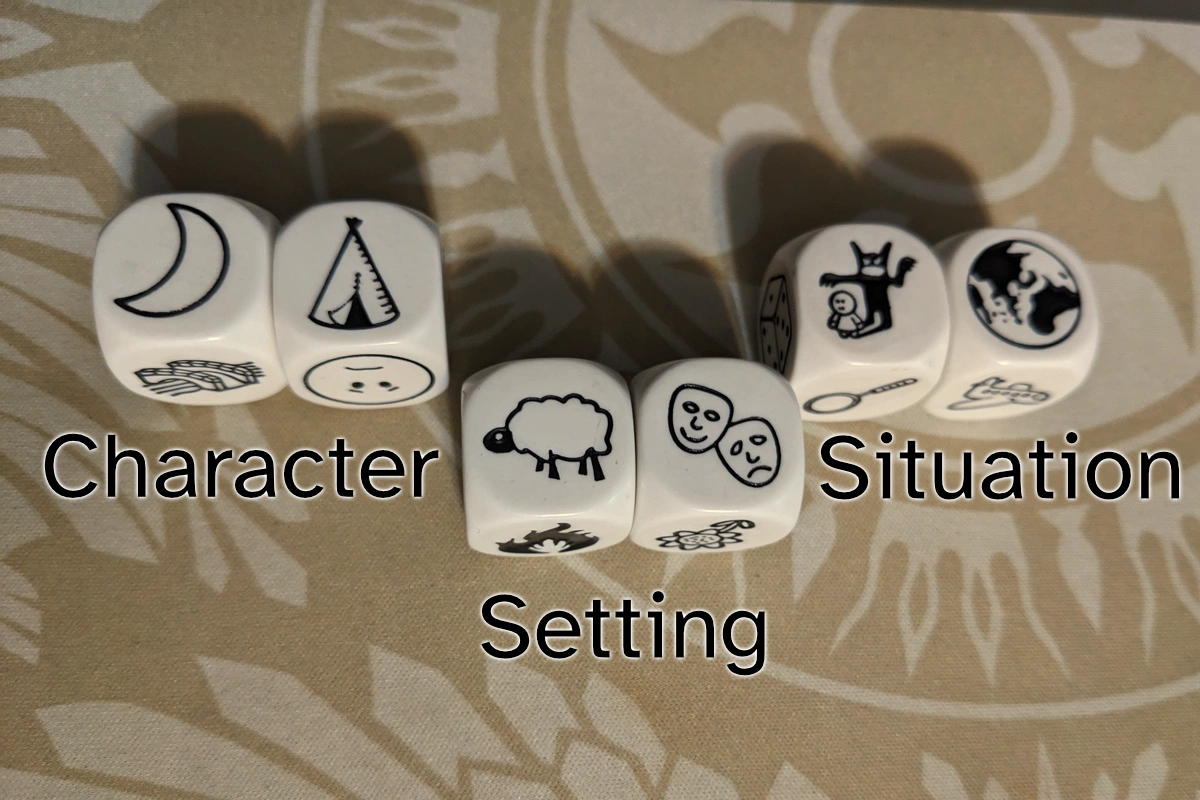
I interpreted the character to be a shepherd on a moon, the setting to be that from another story I'd written involving moon sheep, and the situation to be that the shadow of the planet to contain monsters and to be slowly shifting. I cheated today—I was eager to finish my train of thought so I wrote for another two minutes.


Who am I? Nothing but a lowly herder of moon sheep. They're a tricky breed—invisible to those without the spark of magic in the eyeballs that lets you see them. But their milk is the most precious thing in the world, so those like me who can herd them can make more than a decent livelihood in this here endless waste.

Not that there are many moon sheep to herd—my flock, these days, comprises only three fluffy ewes and not a single ram. I used to have a few more. The wolves got 'em. I was blessed to escape with my life.

You find a moon sheep here or there—they seem to come alive out of nothing but the light of the full moon, and only one at a time, and only scarcely. At least, I only add one to my flock every few months. I've got a theory—they fall through the cracks from some other world and tumble into ours during the night of the full moon, and they can't find their way back. However it happens, I sometimes find them, and I feed them glass and jewels when I can get my hands on them, and in return, they bequeath to me their life-giving milk that seems to cure any ill or injury.

I live in a little tent. I've never felt easy sleeping indoors. And the sheep themselves go wild if you put a roof over them. Instead, they crowd around my tent at night, whether to keep me warm or for comfort or because they're so dumb they think my tent itself is some kind of huge, fleeceless sheep. Whatever the reason, I'm glad they never stray.

But something strange has happened lately.

An alchemist I entertained some months ago had a very odd way of describing the natural world. He was eager to talk about his studies into the nature of material reality, and though I didn't care much about it, I was glad to have another person around, glad to hear some words said aloud even if they were nonsense. But what he said was that the thing we call the moon in the sky—in truth, it's much larger than the world we live on, and in reality, our world revolves around it. Sort of like a lamb sticking close to its dam, I guess.

And he said, moreover, that due to the mathematical ways that things line themselves up, there's a side to our world that's forever bathed in darkness, that's never felt the light of the sun in five hundred years. It didn't used to be like that, he said. Our world used to spin differently, before someone cursed it.

And in that shadowy land, he says, there are monsters, who fled there after the curse. That's what's left of the cities that used to be, and so the monsters live in the ruins of those who came before.

But he also said the spinning of our world is changing, and the sunlit lands shift closer every minute to falling into the cursed darkness.

He didn't believe me when I told him of the moon sheep. They were a superstition, he said, even as he drank their milk. Even while they circled strangely around him, staring at his face intently.

I've never seen them look at someone like that before. It was like intelligence, what I saw then in their eyes.

And never since.